- Real Tampa Bay
- Posts
- 7 Projects Shaping Tampa Bay’s Next Chapter
7 Projects Shaping Tampa Bay’s Next Chapter
Every city has a story and here are 7 more reshaping Tampa Bay

Taylor Gangis
December 01, 2025
Tampa Bay continues stacking projects that move the region forward in real ways. This week’s lineup spans skyline-defining development, medical expansion, industrial production, university district growth, and historic restoration. Each project adds a different layer to the long-term shape of the metro.
1. Elliott Towers, Downtown Tampa

ai generated rendering of Elliott Towers
Elliott Towers is one of the most ambitious proposals downtown has seen in years. The plan calls for a seventy story, seven hundred forty foot tower on the Kress Block, putting it well above anything that exists today. FAA approvals are already secured, so height isn’t the barrier. The project includes one hundred eighteen luxury condos, more than five hundred thousand square feet of office and retail, and a structured garage of over twelve hundred spaces.
The significance goes beyond the height. Tampa has reached a point where national and international developers are testing projects of this scale in the city core instead of bypassing the market entirely. A tower like this adds a different stratum of space for companies and residents that want proximity to the Riverwalk, Water Street, Curtis Hixon Park, and the arts corridor. As the downtown grid fills in, this project shows how far the ceiling has moved.
2. Westshore Plaza Redevelopment

Westshore Rendering
The Westshore Plaza property sits at one of the strongest commercial intersections in the region, surrounded by the airport, Kennedy, the interstate network, and more than 100,000 daytime workers. The mall era has run its course, and the new plan replaces it with a three point five million square foot mixed use district across fifty two acres. That includes two thousand residential units, medical facilities, hotel space, office towers, retail, and structured parking.
Westshore has the density, job base, and accessibility to evolve into a full-service district rather than a place defined by a single shopping center. This redevelopment allows the land to operate at its true economic capacity. It also expands housing options in an area that already has demand from corporate relocations, airport employment, and regional commuters. A refreshed Westshore strengthens Tampa’s broader urban framework and balances out the growth concentrated downtown.
3. Ybor Harbor Waterfront District and Tampa Bay Sun Stadium

The Ybor Harbor plan covers thirty three acres south of Adamo Drive and creates one of the most comprehensive waterfront concepts Tampa has seen. The district includes nearly five thousand residential units, eight hundred hotel rooms, half a million square feet of office, and more than one hundred fifty thousand square feet of retail and entertainment. The dedicated stadium for the Tampa Bay Sun and the new USL headquarters add a strong sports and events layer.
The public waterfront is a major piece of the value. Boardwalks, floating docks, piers, open green space, and new pedestrian circulation tie Ybor and the Channel District together in a way that has been discussed for years but never fully executed. This area sits at the crossroads of port activity, entertainment districts, residential growth, and future transit connections. The scale of the project gives Tampa another anchored waterfront neighborhood with room to evolve over time.
4. Tampa General Hospital’s Ybor City Medical Campus

TGH plans to expand in Ybor
Tampa General is continuing its eastward expansion by assembling sixteen acres in Ybor for a medical campus that includes a hospital, primary care, urgent care, and a medical office component. The site sits between Adamo Drive and the Selmon Connector, an area that has been underutilized despite its proximity to downtown, the port, and the innovation district on the west side.
This project extends the Tampa Medical and Research District footprint and creates a stronger link between clinical care, research, and the innovation work TGH is already doing in the Masonite building. Medical investment tends to be steady, long term, and job dense. It also brings consistent foot traffic and supports hotels, housing, and local retail. This campus gives Ybor an economic anchor that complements the surrounding entertainment, residential, and historic assets.
5. The Mark Tampa at USF

more housing options for USF students
The Mark Tampa reflects the growth of USF and the increasing demand for housing near the university. The project delivers eight hundred seven beds across six stories, offering studios through five bedroom suites. It includes a rooftop pool, jumbotron, sauna, cold plunge, fitness center, sports simulator, study labs, and a significant parking structure.
Landmark Properties has been steadily building a portfolio around USF, and projects like this show how the university area is shifting from low scale, fragmented development into a more intentional district. With USF’s trajectory, the on campus stadium, and continued investment in research facilities like the Morsani College of Medicine downtown, student and innovation related housing will remain central to North Tampa’s evolution. This building adds modern inventory to a corridor that needs it.
6. Bauducco Foods’ Two Hundred Million Dollar Zephyrhills Production Hub

Cookies in Pasco County
Bauducco’s new facility in Zephyrhills represents one of the region’s largest manufacturing commitments. The company is investing two hundred million dollars into a seventy two acre production and distribution hub that will be built in three phases. The first phase opens in 2026 with one hundred twenty employees. Full buildout reaches roughly six hundred jobs by 2030.
The facility is designed to support Bauducco’s national growth, and Zephyrhills approved an eight point two seven million dollar incentive package to secure the project. Pasco County has been building momentum in industrial development for years, but landing a global food production brand adds a deeper operational base than standard logistics or warehouse projects. Manufacturing strengthens supply chains, diversifies job types, and reinforces the county’s position along the Interstate 75 corridor.
7. J.C. Newman’s Sanchez y Haya Restoration
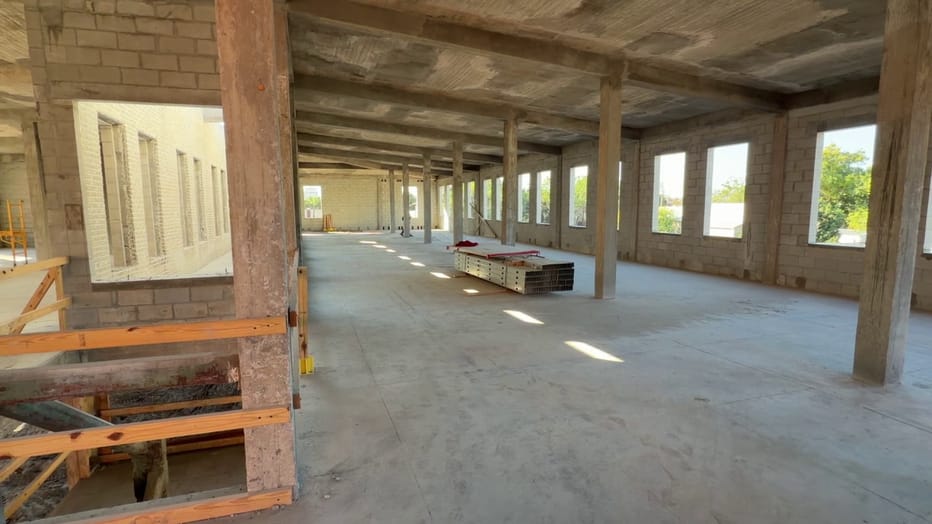
The Sanchez y Haya building has been part of Ybor since 1910 and is historically notable as one of the city’s earliest reinforced concrete structures. After more than a century of weathering, it is now being restored by J.C. Newman with an eighteen point five million dollar investment. The project turns the building into a restaurant, bar, cigar lounge, and a boutique style hotel on the upper floors.
Restoration work has required more than fourteen hundred bags of hand applied concrete to stabilize and repair the structure. The funding blend includes CRA support, county assistance, and federal preservation dollars. Ybor has always balanced growth with cultural preservation, and this project keeps one of the district’s foundational buildings active and relevant. It adds character, hospitality, and a sense of continuity as new development fills in around it.
Closing
This week’s projects highlight how broad Tampa Bay’s growth pattern has become. The skyline is evolving. Westshore is repositioning. Ybor is expanding in multiple directions at once. USF is building a true district. Pasco is strengthening its industrial base. Historic structures are being restored with purpose.
RTBM will continue capturing these changes on camera as they happen and mapping how each project fits into the region’s long-term direction.
If you need any Real Estate Media, we are happy to help you, take a look at what we offer here
www.realtampabay.com